Automotive
Trade-In Lead Capture: The Dealership Lead Nobody Optimizes
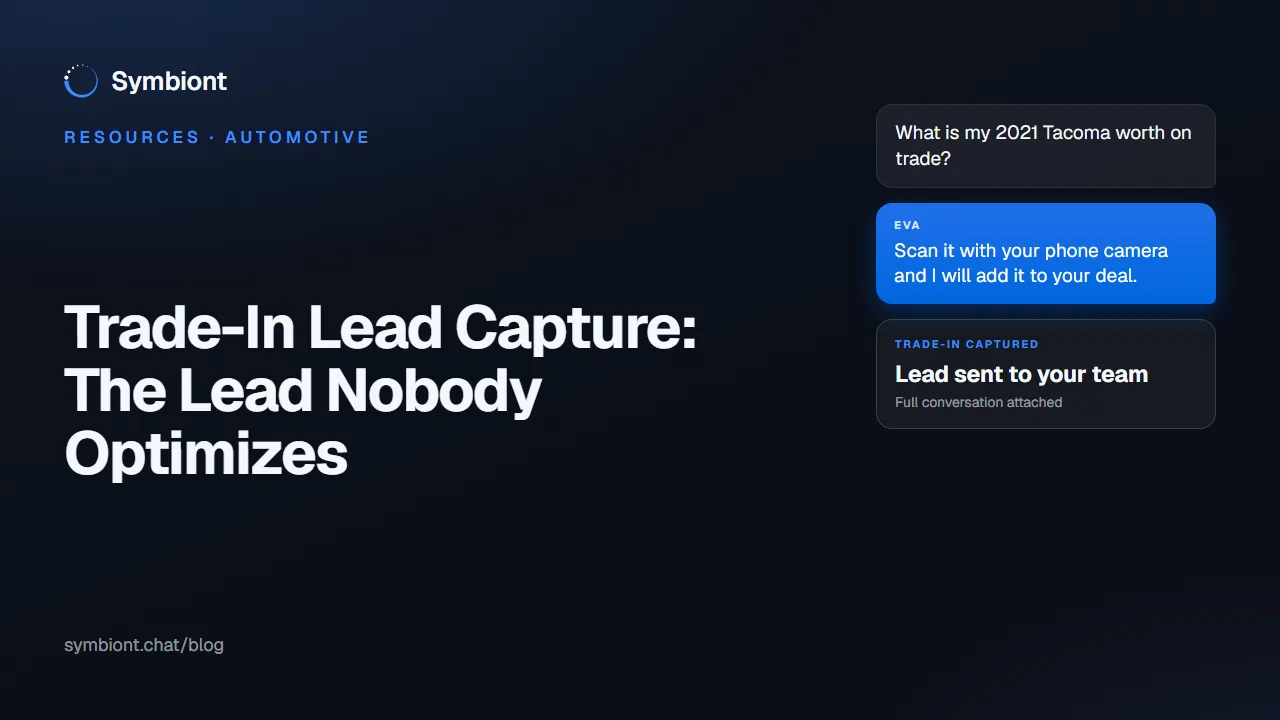
Trade-in lead capture is how a dealership website turns "what is my car worth?" into a named lead with the vehicle attached, and it is the lead most sites optimize least: the valuation sits behind a long form, the number comes from a third party that also wants the car, or the shopper prices it elsewhere and never returns.
In nine years of dealership operations I watched more deals decided on the trade walk than on the sticker. The website has a trade walk too. It is the "Value Your Trade" link in the footer, and on most sites it is the least-worked page a serious buyer ever visits. This post is about that page: why the trade is the signal worth the most, where sites lose it, and what capturing it properly looks like.
Why is the trade-in the strongest signal a website visitor gives?
Because a shopper who values a trade is telling you two things a form never asks: that they are buying, and what they are driving. Edmunds' Q1 2024 used vehicle report put a trade-in on 49% of new-vehicle transactions and 31% of used ones. The trade is also where the deal turns emotional. J.D. Power's 2025 Sales Satisfaction Index, from 32,616 new-vehicle buyers, found 28% of those who traded in said the value was less than they expected; among those buyers, satisfaction with the deal-making process averaged 800 when the dealer explained the number against 672 when it did not. Cox Automotive's Drivers of Car Shopping Satisfaction study ranks getting a trade-in offer, tied with financing, among the five most stressful points of the whole purchase.
Read those together: the trade is the step the buyer dreads, the one they research hardest, and the one that decides whether the payment works. A website that captures it early captures the buyer at the moment of maximum intent and maximum anxiety.
Where do dealership websites lose the trade-in lead?
In three places, and the first is the menu. In a DealerRefresh thread, a dealer group that copied the online retailers and put a "Sell/Trade" link in its main navigation reported a significant increase in trade leads, and credited the market too; another dealer in the thread said submissions doubled and views tripled. Many dealer sites still keep the link in a footer or a dropdown. Two dealers' results are not a benchmark, but the direction is hard to argue with.
The second leak is the form. Most shoppers who trade in have a value in mind before they talk to you: Kelley Blue Book's dealer page on Cox's 2025 buyer data says 72% of consumers who trade in at a dealership use KBB, and CarGurus' 2024 consumer study of 3,150 buyers and sellers found 71% of sellers had already received an online offer for their vehicle. A ten-field form asking that shopper to describe the car from scratch is friction at the one moment they were ready to talk.
The third leak is the offer itself. The shopper's trade has more suitors than the shopper does. CarMax's fiscal 2026 annual report says it bought roughly 1.1 million vehicles from consumers and dealers and that its buy rate is "typically higher" for customers who first receive an online instant appraisal offer; Carvana's annual report describes an automated, conditional offer after a few questions. Kelley Blue Book Instant Cash Offer, per its January 2024 release, was already part of 56% of all U.S. trade-in transactions, and the dealer page states the offer is redeemable at any participating dealer, pending inspection. A trade tool that hands the shopper a number they can carry to the store down the road has captured a valuation, not a lead.
What should a trade-in tool on a dealer website actually do?
Four things, in this order: identify the car with almost no typing, ask only what changes the number, present a value the shopper can trust, and land in your CRM as a lead with the vehicle and the intent attached. Judge every valuation tool on those four, and on where the lead goes. (A deal builder skips the third on purpose and leaves the value to your appraiser; more on that below.)
The category is real and its vendors are honest about what they sell, each verified on its own site in September 2026:
- Protomiq tradeIQ (formerly TradePending) gives an instant valuation on the dealer's own site, scores the lead hot, warm, or cold, and delivers it CRM-ready. Its valuation method uses retail asking prices within a 25-mile radius, updated daily, and the dealer chooses a range or a single number. Pricing is not published.
- AccuTrade (Cars Commerce) gives website visitors an exact offer from VIN, plate, or make and model, which it guarantees to buy back at the same value after an in-store diagnostic scan; per its website setup guide, those leads land in the dealer's Cars.com Hub. Pricing is not published.
- ClearCar (ACV) takes a VIN, plate, or year, make, and model, condition questions, and photos, then returns a single offer with a shareable condition report. Pricing is not published.
- Kelley Blue Book Instant Cash Offer (Cox) gives a seven-day offer redeemable at any participating dealer, pending inspection. Strong for acquisition; not exclusive to the site that generated it. There is a cost to the dealer, not published.
Whichever you choose, the DealerRefresh advice from 2008 still holds: ask a few questions, because shoppers finish short forms. And read the lead-routing fine print before the pricing.
Is an instant cash offer lead a good lead?
It is a good acquisition lead and a shared sales lead, and a dealer should buy it knowing which one they are paying for. Cox's own dealer case study has a Nissan store calling Instant Cash Offer its best acquisition channel, and the 2024 release above puts it inside more than half of all trade-in transactions. Those are acquisition numbers: the program's job is to bring the store cars.
As a sales lead it comes with two catches the dealer page states plainly. The offer is redeemable at any participating dealer, so the shopper who used it on your site can walk it into a competitor's. And the number is conditional: KBB's page says it may be decreased if the dealer's inspection differs, which is exactly the moment J.D. Power's data says an unexplained trade value costs the most satisfaction. Cox's own 2023 update noted that 89% of Instant Cash Offer transactions happened after the seven-day offer expired, so the deadline is not what closes the deal. If the lead reaches your CRM before the shopper reaches another store, it is a good lead. If it reaches your CRM as one of several stores' leads, price it accordingly.
How does the trade-in fit into a deal the shopper builds?
It rides inside the deal instead of sitting in a separate tool. On a dealer site running Eva by Symbiont, the shopper on a vehicle page opens Build My Deal, sets a down payment and a term, scans their trade-in with the phone camera, and leaves an email or phone number to get pricing. Eva captures that lead with the vehicle, the deal structure, the trade, and the whole conversation attached for your team. Your team appraises the trade the way it always has, but now on a shopper who has told you what they want to buy, what they are driving, and what payment they are working toward. The buyer psychology behind the deal builder is its own post, why car buyers would rather build the deal themselves.


The reason the trade belongs in the deal is arithmetic. Edmunds' Q2 2026 negative equity report found 29.6% of trade-ins toward new-vehicle purchases were underwater, by an average of $6,884, and that the average monthly payment on those deals reached $944. For nearly a third of new-car buyers who trade in, the trade is not a line item; it is the payment. A shopper who works that out inside your deal builder, on your inventory, has done the hardest part of the sale on your site. At Coast Buick GMC, a dealership we serve, about 8 in 10 of the leads Symbiont adds arrive through Build My Deal, about 1 in 2 shoppers who start a deal become a lead, and the average buyer spends over five and a half minutes building it. Symbiont is an AI chatbot and visual conversion system. Chat is the front door, not the whole product; the deal, with the trade in it, is what the front door leads to. Everything Eva does for dealerships is on that page.
What should a dealer measure on trade-in leads?
Four numbers, and none of them is "trade tool views." First, trade leads divided by total unique visitors, the same denominator as every other website number, so the trade page competes honestly with the rest of the site; the benchmarks post covers why that denominator matters. Second, the share of built deals that include a trade, which tells you whether the trade is riding inside the sale or living in a silo. Third, time to first personal reply, because Foureyes' 2026 benchmarks found 62.8% of sales leads had not heard from a salesperson 24 hours after returning to the site, and a trade lead that waits a day is a car that gets sold to CarMax. Fourth, the gap between the online number and the appraisal, tracked deal by deal, because J.D. Power's data says that when the value falls short, explaining the gap is worth 128 points of satisfaction. The rest of the site's fixes, in payoff order, are on the dealership website conversion checklist.
Frequently asked questions
What is trade-in lead capture on a dealership website?
It is the tool and the process that turn a visitor's "what is my car worth?" into a named lead with the vehicle attached, on your own site, before they carry the question to a marketplace. Done well it identifies the car from a plate, VIN, or camera scan, asks only what changes the number, and lands in the CRM with the shopper's intent.
Should a dealership show a trade-in value online?
Yes, with the explanation attached. J.D. Power found 28% of buyers who traded in felt the value was less than expected; among them, deal satisfaction averaged 800 when the dealer explained the number against 672 when it did not. A range or an offer both work; a number with no context that then changes at inspection loses the deal.
Do trade-in leads convert better than other internet leads?
No primary benchmark says so. Foureyes' 2026 report tracks forms, calls, and chat, not trade leads, and the trade-lead conversion figures we could find are vendor case studies from single dealers. What the data does support is intent: a shopper valuing a trade is disproportionately a buyer. Measure your own trade leads against total visitors and against your other lead sources before believing anyone's number.
Do I need a trade-in tool if I have a deal builder?
They do different jobs and many stores run both. A valuation tool such as Protomiq, AccuTrade, or ClearCar appraises the car and generates an acquisition lead; a deal builder captures the trade inside the purchase the shopper is structuring. If your problem is buying inventory, start with the appraisal tool. If it is visitors leaving without a lead, start with the deal.
See the trade come in with the deal
The trade is the lead your website already earns and rarely captures. Get a demo and watch a shopper scan their trade into a deal on your own inventory.
How many of last month's visitors valued their trade somewhere else after leaving your site?