Pools
Website Conversion for Pool Builders: Turn More Visitors Into Booked Estimates
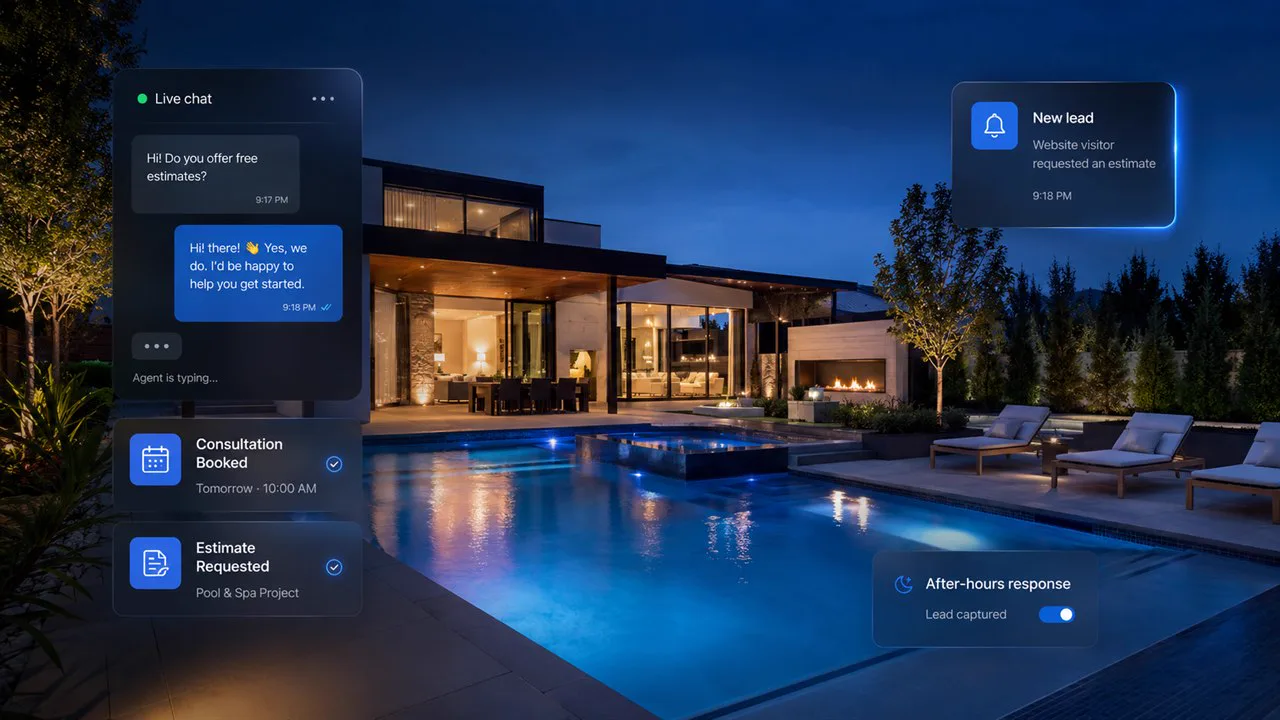
Website conversion for pool builders is the share of your site visitors who take a booked action, a requested estimate or a scheduled consultation, instead of leaving. In 2026, the fastest growth no longer comes from more traffic. It comes from catching the high-intent visitors you already paid for, in the minutes after they reach out, including the nights and weekends when your office is dark.
I learned this the hard way, in a different business. (Cross-vertical, I know; bear with me.) A buyer shows up ready, asks one real question, hits a contact form, and is gone before anyone calls back. The pattern doesn't care what you sell.
"I spent years on the dealership desk watching good leads die in the follow-up gap: not on price, on silence. Pools are the same, just a bigger ticket. That gap is the whole reason we built Eva."
Joshua Seiler, co-founder, Symbiont
Why is converting traffic suddenly more important than getting more of it?
Converting your existing traffic matters more in 2026 because the leads themselves got scarce and expensive. New U.S. pool construction fell to just below 60,000 units in 2025, per Pool Corp's annual report, a figure the company's CEO put at about half the pandemic peak on the Q4 earnings call, as cautious spending and elevated financing costs cooled demand. Fewer homeowners are building. So each one who lands on your site now matters twice as much as it did three years ago.
That rewrites the math. When demand was overflowing, a missed lead was an annoyance. Now it's the difference between a good year and a flat one.
The buyers also cluster where you'd expect. Florida, California, Texas, and Arizona account for about two-thirds of new U.S. pool starts, the same Sun Belt markets where the fight for each homeowner is fiercest.
What does "website conversion" actually mean for a pool company?
For a pool company, website conversion means turning an anonymous browser into a named lead with a clear next step. A homeowner comes to look at your gallery; they leave as an in-home consultation request your team can confirm, not a form they hope someone reads on Monday.
Eva by Symbiont is built for exactly this. Eva is the AI assistant for pool companies and auto dealerships: she starts a real conversation with every visitor, answers project and financing questions in 50+ languages, and captures the consultation request with the full chat attached for your team. The category is AI lead conversion. That's a different job than a lead-generation agency, which sells you more clicks, or a basic website chatbot, which mostly deflects FAQs. And unlike either, Eva can show a homeowner their finished pool in their own backyard before they ever pick up the phone. Symbiont does not re-route the leads your forms already get. It converts the quiet browsers who leave without converting, roughly 98 of every 100 first-time visits by Contentsquare's benchmark, by giving them something first: their own pool, rendered in their own yard. Your existing calls to action keep working exactly as they do today.


Why do pool builders lose so many website leads?
Pool builders lose website leads mostly to silence. The single biggest factor in whether an inquiry converts isn't price or reviews: it's who responds first, and fastest, the discipline we call speed to lead.
The classic Lead Response Management Study put numbers on that cliff (minutes matter, hours don't) and the full research and playbook live in the speed-to-lead guide linked above. This post stays on the step before it: getting the visitor to reach out at all.
Now add when pool buyers actually reach out. Nearly half of high-intent inquiries come in outside normal business hours: evenings, weekends, the moment a homeowner finally sits down after dinner. Your crew is on a job or asleep. The lead is not waiting around for you.
What is a good website conversion rate for a pool builder?
A good website conversion rate for a pool builder is around 5 percent of visitors becoming named leads. And the best sites run double that. Across 13 industries, Ruler Analytics' 2026 benchmark report puts the average at 5.13 percent, with construction and engineering sites at 4.9 percent.
The spread between typical and excellent is the real story. Contentsquare's Digital Experience Benchmark, drawn from 99 billion sessions across more than 6,000 sites, puts new-visitor conversion at 1.7 percent and returning visitors at 2.9 percent. That sample skews toward ecommerce rather than contractors, so treat it as the floor of the wider web rather than your target, and read the 4.9 percent construction figure above as the number to actually beat. The sites at the top aren't getting better traffic. They're doing more with the traffic they get.
We've measured what closing that gap looks like. At Coast Buick GMC, a dealership we serve (a high-ticket, considered purchase, same as a pool), Symbiont adds about half a point to a point of website lead conversion on top of what the store's forms already produce, measured against total site traffic, and 8 in 10 of those leads arrive with a deal the buyer built. Same site, same visitors, more of them leaving a name.
One number this post deliberately skips: what pool leads cost and whether buying more is ever the right move. That's covered in lead conversion for pool builders.
What are the "4 laws" of lead generation?
There's no single official list, but four rules reliably decide whether a pool lead converts: respond fast, follow up persistently, stay relevant to what the buyer actually asked, and track every conversation so none slip through. Break any one and the others stop paying off.
Speed comes first for a reason: see the after-hours gap above. An AI assistant covers all four around the clock, then captures a warm lead with full context for your team instead of a cold name on a list.
How does Symbiont's Eva convert pool builder website traffic?
Eva, Symbiont's AI assistant, converts pool-builder traffic by engaging every visitor in conversation, answering their real project and financing questions, and capturing the consultation request, instantly and around the clock. It's trained on your business, your values, and your voice, so the homeowner gets a relevant reply in seconds at 9 p.m., not a callback on Tuesday.
One capability does more for conversion than anything else here. Inside the chat, a homeowner can design their pool (shape, size, features, financing) and see it appear as an AI rendering placed on a satellite image of their own backyard. Seeing the pool in their actual yard, not a generic showroom photo, is what turns "let me think about it" into a booked consultation. No forms, no friction.
Quiet browsers become booked appointments. Your team starts the day with consultation requests to confirm, each one carrying the full conversation and the pool the homeowner designed, instead of a missed-message log.
Frequently asked questions
What conversion rate should my pool website hit before buying more traffic?
If fewer than about 5 percent of visitors become named leads, fix conversion before buying traffic. Ruler Analytics puts the cross-industry average at 5.13 percent and the best sites run double that; more spend on a leaky site just buys more leakage.
How does in-chat pool design raise website conversion?
It converts the moment of peak interest. A homeowner who designs their pool and sees it rendered in their own backyard has already invested in a vision; leaving contact details to get the design sent over is a natural next step, not a form to abandon.
My traffic isn't huge, is this worth it for a smaller builder?
Often more so. Most pool builders are small, family-run shops, and you can't staff nights and weekends, which is exactly when many leads arrive. Conversion is about catching the visitors you already get, not needing more of them.
How do I measure website conversion for a pool company?
Divide named leads (estimate requests, booked consultations, chat-captured contacts) by total site visitors over the same period. Track it monthly and per traffic source, and watch quality alongside volume: a smaller number of qualified, design-attached leads beats a big pile of empty form fills.
How much does Symbiont cost for a pool company?
Pricing depends on your setup, so it's covered in a short demo rather than posted publicly. You'll get a straight answer for your business in that conversation.
See it run on your own site
New-pool demand is down. The cost of a missed lead is up. Don't keep paying to send homeowners to a site that lets them leave at 9 p.m.; see how Eva captures estimate requests from the traffic you already have.
Get a Demo or call 941-404-5402.
How many estimates slipped away last weekend while your phones were off?