Comparisons
Test Drive Scheduling Software for Car Dealerships: What It Does, and When a Request Is Enough
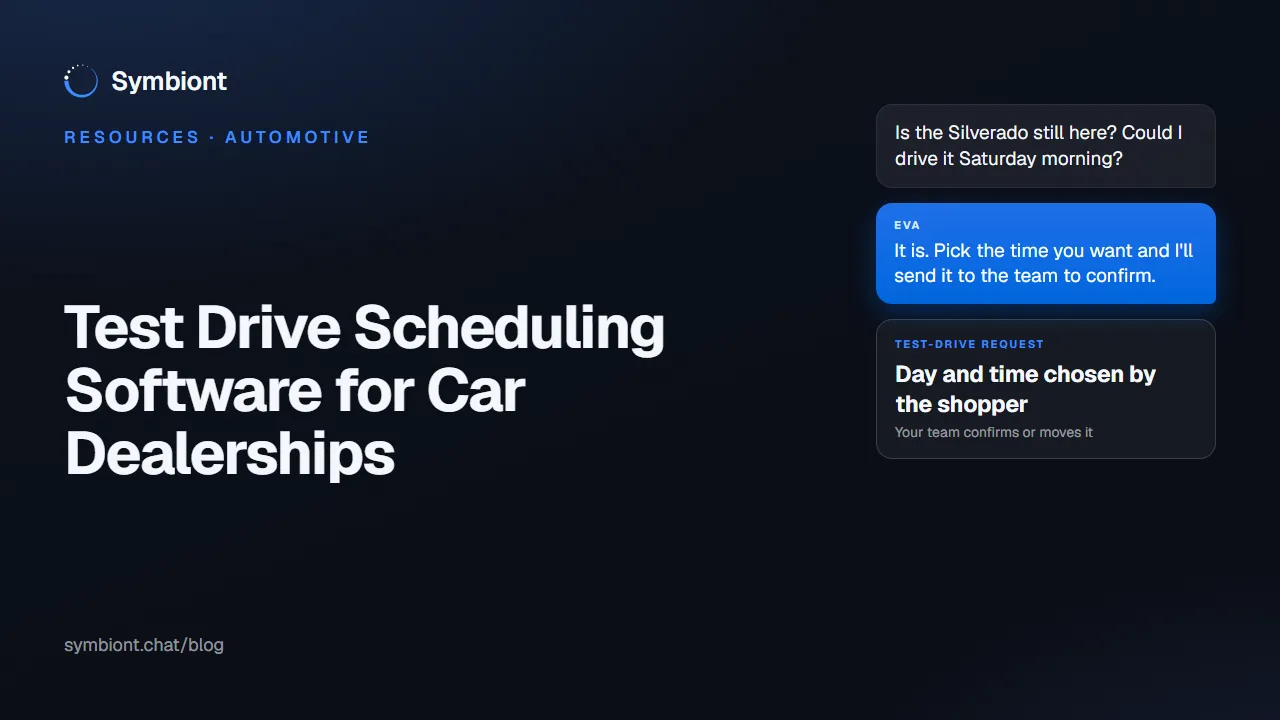
Test drive scheduling software lets a shopper book a slot on a dealership's calendar from the website. It is the right purchase for a group that runs fleets and demo cars centrally. For a single store, the same outcome usually comes from something simpler: capture the request, with the shopper's chosen day and time, and let your team confirm it.
In nine years of dealership operations I never met a "schedule a test drive" button that scheduled a test drive. It collected a name and a phone number, a BDC agent called back, and the appointment got made on the phone, if the shopper picked up. The category now has real software behind it. It is worth being precise about what that software does, and when it is more than you need.
What does test drive scheduling software actually do?
It puts a booking layer between the website and your calendar. The shopper picks a vehicle and a slot, the tool checks availability rules, and the appointment is written down as booked. Testdrive Butler describes itself as "the platform that enables manufacturers, importers and dealer groups to centrally manage test drives, fleets and lead campaigns across all markets," with digital booking at OEM level and real-time availability including vehicle logic. AutoVerify, a Canadian dealership software suite, lists a dealer-level version among its products, AV Test Drive, described on its site as "Streamline bookings with online test drive scheduling." CRM suites carry their own appointment management, and generic booking tools get pressed into service too.
What the category has in common is the calendar write. The software commits a time. That is the feature, and it is also the cost.
Why do shoppers abandon "schedule a test drive" forms?
Because the form asks for commitment before it answers anything. A shopper who wants to drive the truck on Saturday has two questions first: is it still on the lot, and is Saturday morning possible. The form answers neither. It asks for a name, a phone number, and a preferred time, then promises a callback. To a shopper who is still comparing stores, that is a poor trade, and the numbers say most shoppers are still comparing. Cox Automotive's 2025 Car Buyer Journey Study, a survey of 2,300 recent buyers, found buyers visiting 4.6 websites during the process, with 71% starting out undecided about what they would buy.
The shopper who abandons the form has not abandoned the test drive. They have moved it to the next store on the list, the one whose website said yes, it is here, and Saturday works. A booking widget alone does not fix that, because the question it answers, "which slot," comes after the two questions the shopper actually had.
When is a request enough?
For most single stores, always, because the calendar belongs to the desk. A "real-time slot" promises the shopper a confirmed time before anyone at the store has looked at the day: which salesperson is in, whether the vehicle is being detailed, whether a delivery is scheduled in that bay. When the promise breaks, the shopper who felt confirmed feels stood up, which is worse than a request that gets confirmed ten minutes later by a person.
The request version gives the shopper the four things they need: an answer about the vehicle, an answer about availability, a day and time of their choosing, and confidence that a person will confirm. A conversation on the vehicle page can give all four. The shopper asks whether the vehicle is still available and gets an answer on the live inventory. They ask about Saturday, pick a day and a time, and leave a phone number or email. The request reaches your team with the vehicle, the chosen slot, and the whole conversation attached, and your team confirms it or moves it. Nothing is written to a live scheduler.
There is also the data problem. Cox's Digitization of Automotive Retail Study, released in June 2025, found that 62% of dealers run multiple retailing tools and that 83% acknowledge customers often repeat steps in store because of inconsistent online data. Every system the website writes into is another place the data can disagree. A request that arrives with the conversation attached, confirmed by a person, is one less place.
That is the exact mechanism Eva by Symbiont runs: the shopper picks a day and time for a test drive, or for a service visit, inside the chat, and the request is captured for your team to confirm or move. Symbiont is an AI chatbot and visual conversion system. Chat is the front door, not the whole product. It engages the shopper on the vehicle they are looking at, in 50+ languages, and captures the shoppers your website would have lost, the test-drive request included. At Coast Buick GMC, a dealership we serve, Symbiont adds about half a point to a point of website lead conversion on top of what the store's forms already produce, and about 8 in 10 of those leads arrive through Build My Deal, with the average buyer spending over five and a half minutes building the deal. The test-drive request is the step that follows the deal, and it arrives the same way. What she does for dealerships end to end is on the Symbiont for automotive page.


What happens after the request arrives?
Your team confirms it or moves it, and speed decides whether the drive happens. Foureyes' 2026 Automotive Dealer Benchmarks Report, built on 1.4 billion dealer website visits across more than 22,900 dealership websites in 2025, found that 62.8% of sales leads had not heard back from a salesperson within 24 hours of returning to the dealer's site, and that, among the sales leads that end up buying, 61.2% close within three days of the initial website inquiry. A test-drive request carries a day and time the shopper chose, which makes it the easiest lead in the store to confirm quickly, and the most expensive one to leave in the queue.
Service requests follow the same path. A customer who asks about a noise, a warranty question, or an oil change picks a day and time for the visit, and the request reaches the service desk with the conversation attached. The advisor confirms or moves it. Speed to lead for car dealerships covers what a fast, useful confirmation looks like, and the dealership internet lead response time data shows what waiting costs.
What should a dealer check before choosing?
Four questions, in order:
- Does it answer the shopper first? If the tool opens with a calendar instead of an answer about the vehicle, it inherits the form's abandonment problem with a nicer interface.
- Who owns the calendar? A tool that writes bookings needs availability rules kept current for every salesperson, vehicle, and bay. A request keeps that decision with the desk.
- What does it need integrated? Scheduler and DMS integrations are the places data disagrees. A request captured with contact details and the conversation needs none of them.
- How is it measured? Count test-drive requests against total website visitors, with the definition of a lead written down. The audit of dealer chat vendor claims covers the questions to ask.
A group running demo fleets across stores may genuinely need the scheduling layer. A single store whose shoppers write in at 10 p.m. needs the answer and the request. The deal builder post covers the step most shoppers take before they ask to drive, and if the shopper writes in Spanish, the request arrives just the same, which the guide to selling to Spanish-speaking car buyers on your website explains.
FAQ
Does the shopper see real-time availability when requesting a test drive?
Not with a request flow, and that is deliberate. The shopper picks the day and time they want, and your team confirms it or moves it. Nothing is written to a live scheduler, so the desk keeps control of the floor, the vehicle, and the salesperson, and the shopper is never promised a slot that a person has not checked.
Is test drive scheduling software the same as a booking widget?
Mostly, at the single-store level: both write a slot to a calendar from the website. The fuller platforms add fleet logic, availability rules, and multi-store management for groups and manufacturers. The alternative to both is a captured request, which needs no calendar integration and keeps confirmation with a person.
Can customers request a service appointment the same way?
Yes. A customer who asks about a repair, a warranty question, or routine maintenance can pick a day and time for the visit inside the conversation, and the request reaches your service desk with the conversation attached. The advisor confirms or moves it; the website never writes to the shop's scheduler.
Does the test-drive request reach my CRM?
Yes. The request arrives to your team and your CRM with the vehicle, the day and time the shopper chose, their contact details, and the whole conversation. If the shopper built a deal first, the structure they chose comes with it, so the salesperson confirms a drive on a deal that is already most of the way done.
How fast should my team confirm a test-drive request?
Within minutes when the store is open, and first thing when it is not. Foureyes' 2026 benchmarks found that, among the sales leads that end up buying, 61.2% close within three days of the website inquiry, and a request that names a day and time is the warmest lead in the queue. Confirming it quickly is the cheapest thing your store can do to keep the drive.
See a shopper pick a day and time on your own inventory. Get a demo or call 941-404-5402.